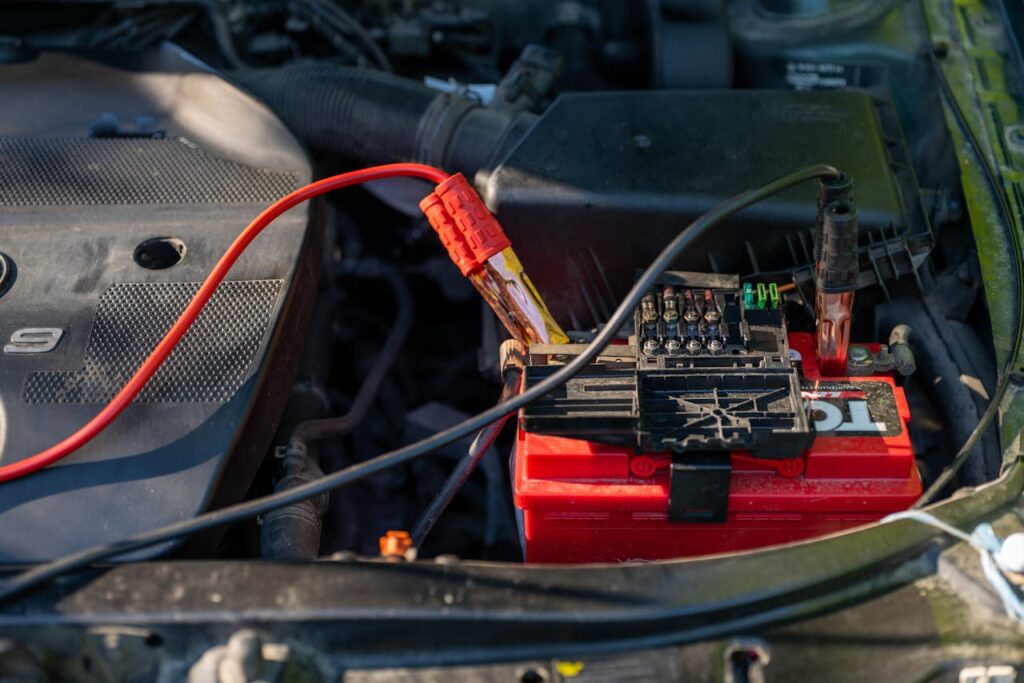
When a car refuses to start, the battery usually gets blamed first. Sure, there are some signs that your car battery is faulty. But in many cases, the battery is not the problem at all. The lights may come on. The radio may work. Yet the engine won’t crank or start properly. This usually means power is reaching the car, but something else is stopping the engine from firing up. That may be the reason the car refuses to start.
Having experienced and diagnosed these problems myself, I know my way around repairing car startup troubles and what to do if you ever find yourself in that situation.
Several components work together during startup, and if one of these fails, the car stays dead. We’ll talk about the common reasons your car won’t start even though the battery is fine, and what you should check for each one.
1. Loose or Corroded Wiring
Your car relies on wires to move power from the battery to the critical components. If a wire is loose, damaged, or corroded, power may not reach where it’s needed. The starter motor is especially sensitive to this. It uses a thick power cable from the battery and a smaller signal wire from the ignition. If either one has a bad connection, the car may struggle to start or not start at all.
If you suspect loose wiring, open the inspect the visible wires near the battery and starter motor. Look for corrosion, looseness, or damaged insulation. If wiggling a wire suddenly allows the car to start, the connection should be repaired. Don’t ignore corrosion. If ignored, it will get worse over time.
2. Starter Relay or Start Motor Problems
If you hear clicking when you turn the key or press the start button, the starter system may be the reason your car refuses to start. Over time, the electrical contacts inside the starter relay or starter motor wear down. When this happens, the starter doesn’t receive enough power to spin fast enough to start the engine.
A single click or repeated clicking is a strong cue. If the engine cranks very slowly or not at all, have the starter motor and relay tested. It certainly goes without saying, but replacing a failing relay early can prevent damage to the starter motor, which is a more expensive fix.
CHECK OUT: 10 Common Renault Clio Problems (And How You Can Fix Them)
3. Fuel Delivery Problems
Another reason why your car refuses to start is fuel delivery. Your engine needs fuel pressure to start. If fuel is not reaching the engine in the right amount, the car will crank but fail to start. Or it may take a long time before it fires up. This may be due to blocked fuel lines, leaking hoses, or a weak fuel pump. These can all reduce fuel pressure. Sometimes the car eventually starts and runs fine, which makes the issue easy to miss.
If your car is failing to start due to issues with the fuel system, there are a couple of ways to go about it. Listen for the fuel pump when you turn the key to the “On” position. You should hear a brief humming sound. If you don’t, the fuel pump or relay may be failing. Repeated long cranks are a warning sign. A mechanic can test fuel pressure to confirm the problem before it gets worse.
4. Failing Alternator
The alternator keeps your battery charged while the engine is running. It also supplies power to the electrical systems in your car. When it starts to fail, the battery slowly drains, even if the battery itself is still in good condition. This can cause starting issues. It may also lead to electrical problems or a car that dies shortly after starting.
How do you diagnose the daily alternator? Watch for dim or flickering headlights, weak audio, or a battery warning light on the dashboard. A burning smell or whining noise under the hood can also point to alternator trouble. A voltage test should show around 13.8-14.2 volts with the engine running. If it doesn’t, have the alternator tested by a professional.
CHECK OUT: These Are The Common Toyota RAV4 Problems
5. Faulty Ignition Switch
The ignition switch controls power to the starter and other key systems. If it’s worn, jammed, or failing internally, power may never reach the starter motor, even though the battery is perfectly fine. This often causes unpredictable starting problems that come and go.
Watch your dashboard when you turn the key or press the start button. If the lights flicker, don’t come on, or everything stays silent, the ignition switch could be the issue. If accessories like the radio or headlights don’t work in the “On” position, have the ignition switch inspected and replaced.
6. Worn or Dirty Spark Plugs
Spark plugs ignite the air-fuel mixture in your engine. When they’re old, fouled, or damaged, the engine may crank but fail to start. Sometimes, it starts after several attempts. Other times it may start, but run rough once it does.
If your car won’t start because of spark plug issues, check the symptoms first. Look out for rough idling, engine misfires, poor acceleration, or a fuel smell when trying to start the car. A check engine light may also appear. Spark plugs are relatively cheap and easy to replace. So this should be your first small step if your car struggles to start.
CHECK OUT: Common Problems With The Nissan Tiida C11 (And Solutions)
7. You’re Out of Gas (Yes, It Happens)
It sounds pretty obvious, but it’s more common than people admit. I certainly did a couple of times. A faulty fuel gauge, aggressive driving, or parking on a steep incline can leave the fuel pickup dry even when the gauge reads empty. The battery can be perfectly healthy, but without fuel, the engine won’t start.
Check your fuel level manually if possible. If the tank is low, add a few liters of fuel and try again. If this happens often, your fuel gauge or fuel level sensor may be faulty.
8. A Blown Fuse or Bad Relay
Modern cars rely heavily on fuses and relays to power critical starting systems. A blown fuse or failed relay can cut power to the fuel pump, starter, or ignition system, making the car seem completely dead even though the battery is fine.
Locate your fuse box (usually under the hood or dashboard) and inspect fuses related to the starter, ignition, and fuel pump. Replace any blown fuse with one of the same rating. If the problem keeps returning, a mechanic should check for an underlying electrical fault.
9. A Clogged Fuel Filter
A fuel filter keeps dirt and debris from reaching your engine. Over time, the fuel filter can become clogged, which restricts fuel flow. When that happens, the engine may struggle to start or fail to start at all, even though the battery is fine.
If your car cranks but won’t fire up, or starts after several attempts, check that pesky filter. This is particularly common in older vehicles or cars that haven’t had regular maintenance. Just like spark plugs, Fuel filters are usually cheap. Replacing one often restores normal starting immediately.
10. Immobilizer or Anti-Theft System Issues
Many modern cars use an immobilizer system that prevents the engine from starting without the correct key or signal. If the system fails to recognize your key, it can shut down the starter or fuel system entirely, making it seem like the car is broken when it’s actually a security lockout.
Look for a flashing security or key-shaped warning light on the dashboard. Try using a spare key if you have one, or replace the key fob battery. If the problem persists, the immobilizer system may need to be reset or reprogrammed by a professional.